Interesting Etymologies

Hmm. I've heard "Barney" standing in for "trouble", but what about the expression "to-do" (meaning the same)...? For instance:

- "Been a bit of a to-do down the docks, sarge."
- "Good thing you got here, sarge. Them toughs got pissed and started havin' a barney!"

Also, I am not so sure about the derivation of "barney". According to the references of the wiktionary entry of the word "barney", it used to mean a whole variety of things: a bad recitation, an unfair competition (with inferences of cheating), a crowd of rowdies or toughs doing something they shouldn't -- but all the derivations stem from either the 1850s or the late 1880s/early 1890s. This is obviously much earlier than Hanna-Barbera. :)

Check out the original entries here:

A dictionary of slang, jargon & cant (pub. 1889-90)
Slang and its analogues past and present (pub. 1890-1904)

Sorry. :) Maybe the "Barney Rubble" connection got added later? I've also heard the same thing connected with Barney Fife.
 
I doubt Barney rubble is the origin of having a Barnie… since most genuine rhyming slang significantly predates mass TV

I suspect it derives from Barnet fair … a horse and street fair in Barnet London during which things generally got a bit ‘ lively’

Barnet fair itself in rhyming slang however means your hair and generally a haircut … that’s a real nice Barnet you got there geez”
 
We were playing Scrabble on the patio and a motorcycle loudly backfired on the road.

“Jumping Jehoshaphat,” my brother said.

So, it got me thinking (and googling) about the origin of such an unusual phrase.

Apparently, it is a “minced oath” – a euphemism used to substitute for what might be considered offensive.

First recorded in the 1866 novel The Headless Horseman, the name "Jehoshaphat" was likely a euphemism for "Jesus." Why they chose him to jump is open to interpretation.

It’s curious why we would have need for minced oaths. Why say “gosh” for “God?” Why say “fudge” for “f*ck?”

Just say the word. All words are good.
 
@Louanne Learning, minced oaths get around the old biblical admonishment “Take not the Lord’s name in vain” widely considered to mean don’t cuss.

In normal US society, one didn’t curse in public and definitely not on tv. Remember Carlin’s “7 words you can’t say on tv”?

That really started changing in the mid 70’s and by the 90’s, it became more or less required. Such a shame, as that has really restricted vocabularies in ordinary conversations.
 
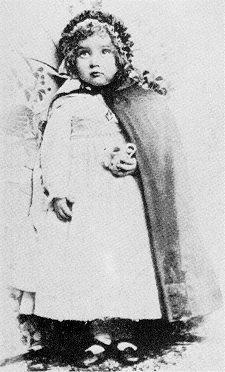
The name "Wendy" comes directly from J.M. Barrie and Peter Pan. It wasn't a given name before that.

It was a little girl, the daughter of Barrie's friend W.E. Henly (who had one leg and served as a inspiration for Long John Silver) who inspired the name. She was Margaret Henly, who called Barrie her "friendy", but pronounced it "fwendy". Barrie shortened that to Wendy for the novel.

Sadly, Margaret Henly died at the age of 5 of cerebral meningitis.

Margaret_Henley.png
 
@Louanne Learning, minced oaths get around the old biblical admonishment “Take not the Lord’s name in vain” widely considered to mean don’t cuss.

In normal US society, one didn’t curse in public and definitely not on tv. Remember Carlin’s “7 words you can’t say on tv”?

That really started changing in the mid 70’s and by the 90’s, it became more or less required. Such a shame, as that has really restricted vocabularies in ordinary conversations.

The issue of using oaths in public is older than “Seven Words You Can Never Say On Television”. (I never saw Carlin live, but I listened to all his CDs ... and read his books). He had many funny and unexpected insights.

But back to swearing in public: this reminds me very much of a song that Flanders and Swann did in the 1950s, because the avant garde at the time (think "Angry Young Men" and so on) were using four-letter words back then to shock the elder generation and show how straightforward and honest they were, by not using euphemisms, and not being afraid to say those words.

Well, Michael Flanders had a short introduction to each song, and to quote Michael: "This -- this is quite shocking. I mean, if we're going to be using four-letter words every day, we're not going to have any of them left for special occasions, will we?" ;)

But, as Michael rightly pointed out, "it is perhaps time to let go of our mealy-mouthed hypocritical pretensions," and so they wrote a very tongue-in-cheek little song, which Michael quite rightly termed as "fearless .. forthright ... and filthy!"


Curse of the Ancients, indeed. :)
 
The name "Wendy" comes directly from J.M. Barrie and Peter Pan. It wasn't a given name before that.
I didn't know that. "Wendy" was a nickname for "Gwendolyn" but that name has fallen out of favor now. I'm sure there are dozens of names that were once nicknames but are now given names. (I know three "Randys"...all given names, with not one Randolph in the bunch.)
 
On the subject of dirty words in songs, there used to be a number of songs that went like this

There was an old lady who sat on the rocks
And taught all the young boys to play with their
Kite strings and marbles, in days of yore
Along came a lady who looked like a
Very nice young lady who walked like a duck
And said she'd discovered a new way to
Bring up the children and teach them to knit
While down in the stable they shoveled the
Refuse from the stable after the hunt..".

And so on (I've forgotten the rest). I also remember

"Casey had a steamboat the steamboat had a bell
Casey went to heaven, the steamboat went to
Hello operator, give me number nine
If you don't connect me, I'll kick you in the
Behind the kitchen door, Sally had a glass
Sally fell and broke it and cut her little
Ask me no questions..."

We nine-year-olds got quit a thrill singing them.
 
Today I read an article from The Culturist entitled What Makes a Genius? It touched upon some etymology.

“Genius” comes directly from the Latin for guardian spirit, genius, also carrying connotations of creative power — hence the etymological link to “generate”.

It’s interesting to think of your creative power as your guardian spirit.

And never before had I connected “men” to “mentality”

That word “man” unpacks that “more” because (William) Blake meant man not only in the sense of human being, but also in the sense of creatures who have intelligence or “mentality” — “men” and “mentality” sharing the same root.
 
This is the opposite of an interesting etymology. My son asked if bad cars were called "lemons" because "Citroën" derives from a word meaning lemon. Apparently the answer is no. :LOL:
 
I didn't know that. "Wendy" was a nickname for "Gwendolyn" but that name has fallen out of favor now. I'm sure there are dozens of names that were once nicknames but are now given names. (I know three "Randys"...all given names, with not one Randolph in the bunch.)

I don't know about Gwendolyn, but the name Jennifer derives, via Welsh, Cornish and French from Guinevere.
 
On the subject of dirty words in songs, there used to be a number of songs that went like this

There was an old lady who sat on the rocks
And taught all the young boys to play with their
Kite strings and marbles, in days of yore
Along came a lady who looked like a
Very nice young lady who walked like a duck
And said she'd discovered a new way to
Bring up the children and teach them to knit
While down in the stable they shoveled the
Refuse from the stable after the hunt..".

And so on (I've forgotten the rest). I also remember

"Casey had a steamboat the steamboat had a bell
Casey went to heaven, the steamboat went to
Hello operator, give me number nine
If you don't connect me, I'll kick you in the
Behind the kitchen door, Sally had a glass
Sally fell and broke it and cut her little
Ask me no questions..."

We nine-year-olds got quit a thrill singing them.

I've never heard either of these sung, actually. (English is my second language, and I didn't start using it day-in, day-out until I was 13 or 14). But I've heard of the second one, thanks to The Simpsons, where some of the mean seven-year-old girls sing it while skipping rope.

Ah, The Simpsons. Is there anything they won't do? ;)

By the way, JLT ... you missed one: "Christmas Day", by the Scared Weird Little Guys. (Similar sort of thing, but for adults. It starts out like this, but eventually it becomes very dirty indeed. Talk about bait-and-switch! :)

Here's the link - warning, NSFW or Little Kids: Christmas Day.)

I don't know about Gwendolyn, but the name Jennifer derives, via Welsh, Cornish and French from Guinevere.

Here's the interesting history of Gwendolyn (or Gwendolen, the original spelling): Behind The Name: Gwendolen. (Gwendolyn is more common in the USA).

Having said that, Oscar Wilde's "The Importance of Being Earnest" (very, very funny and recommended) has a major character named Gwendolyn.

You're absolutely right about Jennifer. Behind the Name tells me that Jennifer/Guinevere "derives ultimately from the Welsh name Gwenhwyfar" (see Guinevere), and the name was not common outside Cornwall before the beginning of the 20th century.

I apologize: I know that "Behind the Name" is only one website, and isn't conclusive proof. :) But they do good work!
 
This is the opposite of an interesting etymology. My son asked if bad cars were called "lemons" because "Citroën" derives from a word meaning lemon. Apparently the answer is no. :LOL:
My father had a Citroën that lasted about 60,000 miles before the engine blew. It was an ID19, a cheaper version of the famous DS19 that was popular in the 1960s, but without power steering and a few other things. It wasn't exactly a lemon, although 60,000 miles seemed to be par for the course for French cars (I had a Renault that went the same distance before it died. )

OTOH, my 1971 VW bus has about 350,000 miles on it, of which 50,000 miles are mine.
 
Back
Top