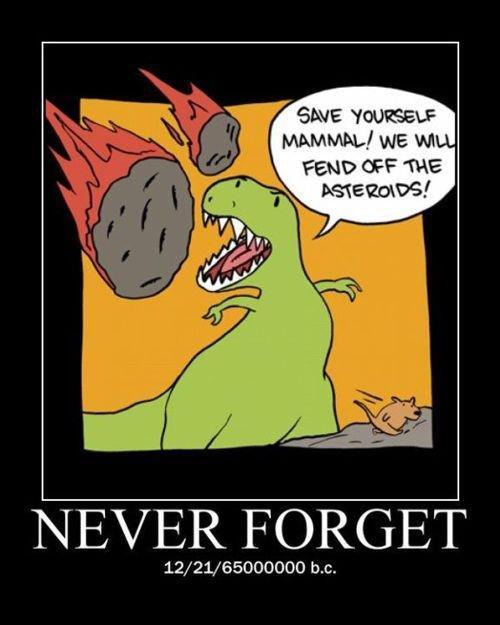
Optimistic Idealism. Dead? Boring?

Oh, fair. It's a tradeoff

Good way of putting it. I love electricity. I love my central heat. But looking at the organization of society from the macro view, we've got a society built on domination, state over citizen, rich over poor, winners and losers, and lots of people falling through the cracks.
 
Good way of putting it. I love electricity. I love my central heat. But looking at the organization of society from the macro view, we've got a society built on domination, state over citizen, rich over poor, winners and losers, and lots of people falling through the cracks.
Well they say everyone has an anarchist inside of them trying to get out.

I see a lot of winners and losers in nature, too. Entire species go extinct, and it's not even always our fault.

BBpJA8LCAAAeoff.jpg
 
I got a feeling no-one was "homeless" ten thousand years ago
Exiled, which usually meant death. Or displaced via territory dispute, or simply brutalized. Not to mention the concept of sexual consent likely didn't exist (though to be fair that's relatively recent, and still depends on where you live).

A gazelle is never homeless either. Is it a better existence? I think a lot of people might be willing to say so. I don't agree with them, but I'm sympathetic to the rationale behind their notions.

Take it to the extreme: being an amoeba would mean avoiding a lot of human suffering. Also never homeless, or addicted to synthetic opioids, or tortured, or blown up, or butchered, or exploited. If we all started as amoebas and didn't know what we were missing, maybe it wouldn't be so bad. However, I'm aware of what heights humanity has reached in spite of its lows, so waking up an amoeba tomorrow would be a terrible shame.

E. W. Wilcox:
The sorriest things in this life will seem grandest
in the next.
 
Last edited:
@DLC - we were not "noble savages" tens of thousands of years ago. we were humans living in nature.

We were not caricatures.
That's what I said.
'egalitarian social structures existed tens of thousands of years ago.' you said. I don't think so.
 
Some older sci fi used to incorporate genuine utopias, or at least non-cynical views on tech and advances in ways of living. It seems that collectively we got wise to the fact that a traditional utopia (we wear robes and want for nothing) would have very little liberty or individualism, so we treat that with cynicism, which doesn't leave much left as for favourably viewing continental shifts in society.

I'm think of the likes of Heinlein, who first optimistically explored extreme collectivist themes (Stranger in a Strange Land) then a bit in the opposite direction with Starship Troopers.

Star Trek sort of has that, but it apparently has shady amoral government organisations and the utopia has committed war crimes too? I don't know the details. I've never watched any of the shows, but I guess some cynicism had to be in there too. Perhaps some veteran can correct me and say it's always actually been a dystopia.


Can you think of stories with genuine utopian settings, especially modern ones? Or perhaps you yourself have something cooking? It seems to go against the basics of storytelling, where convenience, unification, and abundance are simply missed opportunities for conflict. However, it also seems like an classic feature for some sci fi stories to have.

I'm hoping this can stay more about how authors today are or aren't representing their own versions of utopia, rather than what each of us personally thinks about concepts like socialism, libertarianism, sexual liberation or constriction, etc.

If you have not read any of Ian Bainks 'Culture' novels I highly recommend them. Utopian and dysopian hand-in-hand. I hope his vision of the future comes true. We certainly seem to be heading in that kind of direction--with the highly speculative assumption AI can transition into a form of conscoiusness relevant to human consciousness!
 
If you have not read any of Ian Bainks 'Culture' novels I highly recommend them. Utopian and dysopian hand-in-hand. I hope his vision of the future comes true. We certainly seem to be heading in that kind of direction--with the highly speculative assumption AI can transition into a form of conscoiusness relevant to human consciousness!
I just read a little of the setting on Wikipedia. It seems like he dives head first into the struggle for purpose in an abundant society, like his starting point was "We solved all of our problems. Now what?" Good stuff.
 
'egalitarian social structures

Dr. Kemp's point was that, in the hundreds of collapsed societies he has studied, wealth inequality seems to be an important factor
So that may be a consideration for any writer thinking about creating a Utopia/Dystopia

(Also - it seems reasonable that social expectations will be more closely followed in smaller scale societies)

Anyways, in Indigenous peoples, we often find that resources are treated like they are held in common.
This attitude/belief is illustrated by an anecdote from 1777 -

Some travelling Indians having in the year 1777, put their horses over night to pasture in my little meadow, at Gnadenhütten on the Muskingum, I called on them in the morning to learn why they had done so. I endeavoured to make them sensible of the injury they had done me, especially as I intended to mow the meadow in a day or two. Having finished my complaint, one of them replied: “My friend, it seems you lay claim to the grass my horses have eaten, because you had enclosed it with a fence: now tell me, who caused the grass to grow? Can you make the grass grow? I think not, and no body can except the great Mannitto. He it is who causes it to grow both for my horses and for yours! See, friend! the grass which grows out of the earth is common to all; the game in the woods is common to all. Say, did you never eat venison and bear’s meat?—‘Yes, very often.’—Well, and did you ever hear me or any other Indian complain about that? No; then be not disturbed at my horses having eaten only once, of what you call your grass, though the grass my horses did eat, in like manner as the meat you did eat, was given to the Indians by the Great Spirit. Besides, if you will but consider, you will find that my horses did not eat all your grass. For friendship’s sake, however, I shall never put my horses in your meadow again.”

This is all just grist for the mill for writers
 
I just read a little of the setting on Wikipedia. It seems like he dives head first into the struggle for purpose in an abundant society, like his starting point was "We solved all of our problems. Now what?" Good stuff.
The AI intelligences in the noval are REALLY fun and funny. Love the names they have.

Probably the best book to start with would be 'The Player of Games' as it pretty much gives a nice overview of 'The Culture'.

'Use of Weapons' is a pretty horrific novel if you enjoy something that will make you shudder (I just did thinking about it). I am by no means squimish either, and generally find horror comical or silly. The shock factor is something else. Never read anything that comes close!
 
interesting point. But if the writer really believes in it, is it propaganda? And do we need to understand his/her aims?
Some of the most effective propaganda is sincere and factual; its effectiveness is founded on the way facts are selected to build a narrative that supports the propagandist's intent. Knowing the intent allows us to evaluate the morality behind the action, but objectively, understanding the intent isn’t necessary to detect the presence of propaganda, though it can mediate its effect. For example, watching a TV advert may leave us with little doubt that the creator intends to enrich himself at our expense, so the spell is broken. By contrast, it can be more challenging to discern the diffuse intent behind an article in our favourite magazine about the findings of a report written by a panel of experts handpicked by the propagandist; this requires a higher level of critical thought, media literacy, etc. We may fail to spot the intent, but it isn't any less propagandistic; on the contrary, it is likely to be all the more effective for that absence.

I’m not suggesting that all political philosophy expressed through fiction is automatically propaganda, but it has the potential to be. It hinges on whether the author leaves enough room – enough ambiguity and tension, etc. – to allow the reader the freedom to interpret the ideas herself. Clearly, a utopia carries a higher risk of being presented as morally resolved and structurally complete, potentially reducing the range of possible reader outcomes to little more than passive assent. This is perhaps one reason why utopias are a bit hit or miss, as you stated a few pages back; not everyone will be enamoured with another’s idea of totality.

Of the little utopian fiction I’ve read, stories like Brave New World and Island (Huxley) and The Dispossessed (Le Guin) appear as explorations that encourage contemplation. For the record, Island was a particularly laborious read.
 
Well they say everyone has an anarchist inside of them trying to get out.

I see a lot of winners and losers in nature, too. Entire species go extinct, and it's not even always our fault.

BBpJA8LCAAAeoff.jpg
That's hilarious. Where there even mammals then? No need to answer... my Google works fine if I care enough to investigate.

Regarding collapsing societies, it depends on what you mean by "collapse." You can say the Roman Empire collapsed, but that's a story of social and political authorities evolving or migrating. The Roman citizens didn't go anywhere or have to change much of their daily routine. They just fell under a different name or authority. Communist Russia collapses too but the communists didn't go anywhere. They weren't allowed to call themselves communists anymore but the ideology or way of live didn't disappear on a Tuesday morning or anything.

Jared Diamond, of Guns Germs and Steel, fame, wrote in Collapse about a much smaller Polynesian, Icelandic, and Easter Island-esque societies that literally died out or completely ran away. In his words: "a drastic decrease in human population size and/or political/economic/social complexity, over a considerable area, for an extended time."

And a summary: Diamond identifies five factors that contribute to collapse: climate change, hostile neighbours, collapse of essential trading partners, environmental problems, and the society's response to the foregoing four factors.

It's a great book, but not as mind blowing as Guns. He talks about the Romans, Mayans, and a few modern examples like China and Australia that face different challenges. Lots of random like certain Norse tribes dying out because they didn't want to eat fish and stubbornly tried to raise sheep where it was impractical.

But in the macro sense, I would totally agree that all civilization is based on dominance and exploitation that will use any tool it can think off to funnel resources from the very many to the very few.
 
It's a great book, but not as mind blowing as Guns.
Guns was interesting. No regrets reading it. A lot of people criticized some of the leaps he made, but I thought the monumental effort alone was an impressive starting point for that kind of theory. Frankly, the prompt he was trying to regard is usually supplied in bad faith (pro-eugenics actors)—the idea that all societies should advance into complexity at at least the same rate as European/certain Asian ones, and if not, they must have some kind of deficiency compared to them. So, understanding that he had to start with a ridiculous premise (contemporaries ignoring the almost infinite array of variables that affect progress) made me appreciate the book even more in spite of its flaws.
 
Back
Top