Prohibition

CatrionaGrace

Mind the thorns
Active Member
Member
New Member
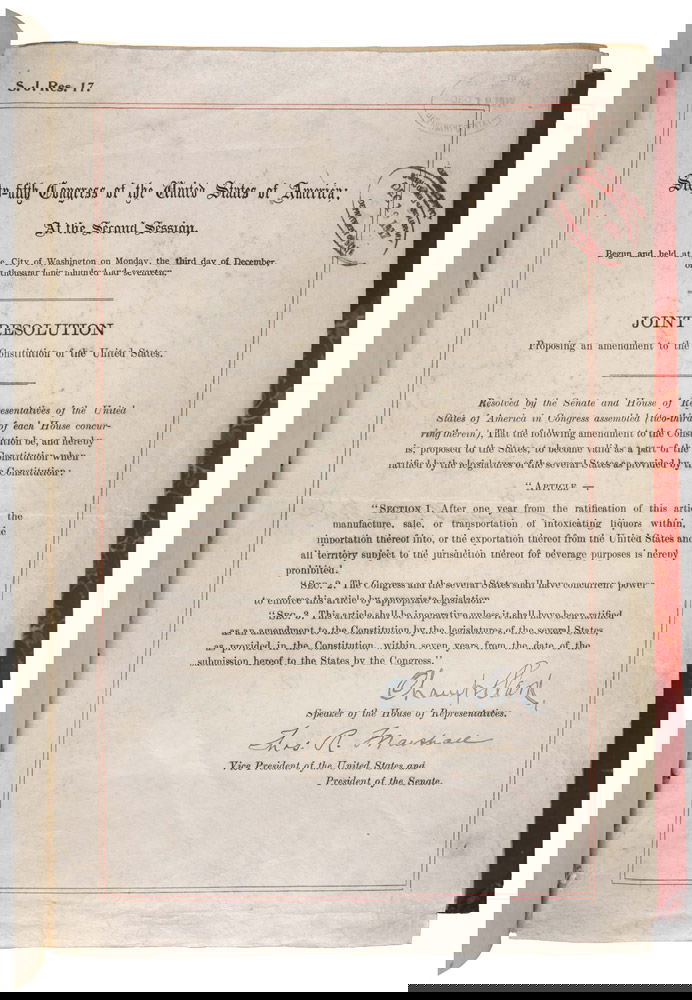
Tracing prohibition in Arkansas and Texas has been a challenge. Both Texas and Arkansas passed state prohibition laws before the national law went into effect. Prior to prohibition, they were such hodge podges of dry and wet counties that I can't decide where to locate the licensed distributors. There were between 9 and 11 wet counties in Arkansas in 1915, but despite four research librarians in two states looking into records, I can't determine which ones. When I was 15, a very old friend of my father's told me that Fulton had two churches and a dozen bars when she was a young woman, from which I extrapolate Hempstead County was wet in the late 19th, early 20th century. But it makes me NUTS to not be able to locate primary documentation.
 
Tracing prohibition in Arkansas and Texas has been a challenge. Both Texas and Arkansas passed state prohibition laws before the national law went into effect. Prior to prohibition, they were such hodge podges of dry and wet counties that I can't decide where to locate the licensed distributors. There were between 9 and 11 wet counties in Arkansas in 1915, but despite four research librarians in two states looking into records, I can't determine which ones. When I was 15, a very old friend of my father's told me that Fulton had two churches and a dozen bars when she was a young woman, from which I extrapolate Hempstead County was wet in the late 19th, early 20th century. But it makes me NUTS to not be able to locate primary documentation.
A place to look for documentation might be the local newspapers of those counties. They would probably have records of busts for violations of the temperance laws.

Or you could simply establish mythical counties in the area you're writing about, and set your story there.
 
Tracing prohibition in Arkansas and Texas has been a challenge. Both Texas and Arkansas passed state prohibition laws before the national law went into effect. Prior to prohibition, they were such hodge podges of dry and wet counties that I can't decide where to locate the licensed distributors. There were between 9 and 11 wet counties in Arkansas in 1915, but despite four research librarians in two states looking into records, I can't determine which ones. When I was 15, a very old friend of my father's told me that Fulton had two churches and a dozen bars when she was a young woman, from which I extrapolate Hempstead County was wet in the late 19th, early 20th century. But it makes me NUTS to not be able to locate primary documentation.
This looks promising for Arkansas at least?

 
A place to look for documentation might be the local newspapers of those counties. They would probably have records of busts for violations of the temperance laws.

Or you could simply establish mythical counties in the area you're writing about, and set your story there.
Seeking out newspapers in the area is a good idea. I've tried accessing those records during genealogical research, but kept running into paywalls for newpaper collections. After reading your post, I gave it another try. I found This Site that offers free access to some newspapers. Good old Library of Congress. I'll read through available issues and see what I can find. Even if I don't turn up what I need, it'll be a great rabbit hole to explore.

Inventing mythical counties won't work for me. I write historical fiction and I don't want to cheat by making up places to save myself some research.
 
This looks promising for Arkansas at least?

Thanks, Trish. The Encyclopedia of Arkansas was the first place I checked. It's a good resource, but not detailed enough for my purposes. I also contacted several Arkansas universities and a state historical entity. Research librarians all over the state sent back suggestions and related references, along with requests to let them know if I ever find the answer to the questions.
 
Thanks, Trish. The Encyclopedia of Arkansas was the first place I checked. It's a good resource, but not detailed enough for my purposes. I also contacted several Arkansas universities and a state historical entity. Research librarians all over the state sent back suggestions and related references, along with requests to let them know if I ever find the answer to the questions.
Hot Springs (Garland) is almost always mentioned in things I'm finding about hold-outs until the Newberry Act (and even referenced as fighting it), but none of them share the link or image of the original information. If it were me, I'd choose that one. After covering all bases to prove what was a wet county and failing, it's maybe a stronger option to choose one that can't definitively be proven not to have been.
 
I wouldn't think that would be a terribly difficult thing to pin down, but apparently so. The counties don't have records of their own laws? I understand it's rural Arkansas, but still. If after more digging nobody still knows, there won't be anyone to contradict you.
 
bearing I wouldn't think that would be a terribly difficult thing to pin down, but apparently so. The counties don't have records of their own laws? I understand it's rural Arkansas, but still. If after more digging nobody still knows, there won't be anyone to contradict you.
Sounds simple, doesn't it? Brings to mind neat files of important information, alphabetized and organized by month and year. Alas. Old records are not well organized, much less digitalized, and the paper records are buried in storage under a hundred years of other records. It took me a full day in the courthouse to trace ownership of our farm back to the early 20th century when the land was divided into two parcels for a while. One of these days, I'll go back and start with the original land bounty claim and work forward. That research included relatively accessible books since title searches are common.

DIsorganization of public records is not just true of small town Arkansas, where records are plagued with everything from insects to mildew, and fires to floods. One of these days when I'm properly sedated, I'll tell you about records searches in courthouses in larger communities.

Hot Springs (Garland)

Hot Springs is high on my list of probabilities. Even after Prohibition, lots of illegal alcohol flowed from this area north to Chicago under a healthful waters label.

A place to look for documentation might be the local newspapers of those counties.
I've been through dozens of pages at this point without finding a single mention of alcohol. HOWEVER! I've found out all sorts of stuff about cotton and cattle, which are also on my list of research items. JLT, honey, if my roses were blooming right now, I'd send you a bouquet for sending me off to find accessible newspapers.

Incidentally, I found the first Hempstead County draft call list for WWI. My great uncle was on it.
 
PS To further confuse the issue, even if counties declared themselves dry, individual municipalities could pass a special referendum (I think that's the term) allowing sales of alcohol under certain conditions. My home county has been dry ever since I've been around, but organization like VFW are able to sell alcohol in specific instances. Then there are the places that can sell 3% beer but nothing else. The regulations and exceptions go on and on and on. Situations are rarely static. What was true in July 1910 might not be true in August 1911.

In Texas, state prohibition seems to have run somewhat along the lines of culture. In the north where the good old Anglo-Celts settled and adhered to Presbyterian, Baptist, and similar churches, prohibition was a big hit. Further south in the land with more German and Mexican Catholics, alcohol was less likely to be viewed as an arm of Satan.

I suspect in the end, I'll make my best educated guess and go with it. If any reader wants to produce incontrovertible evidence that I'm wrong, cool buckets- evidence will answer an interesting question. At this point, after long hours of research by half a dozen professionals, I don't expect a random person to discover the mother lode of prohibition documentation.

HOWEVER: if you do, please, send the references and I will send you a virtual bouquet of roses, too.
 
PS To further confuse the issue, even if counties declared themselves dry, individual municipalities could pass a special referendum (I think that's the term) allowing sales of alcohol under certain conditions. My home county has been dry ever since I've been around, but organization like VFW are able to sell alcohol in specific instances. Then there are the places that can sell 3% beer but nothing else. The regulations and exceptions go on and on and on. Situations are rarely static. What was true in July 1910 might not be true in August 1911.

In Texas, state prohibition seems to have run somewhat along the lines of culture. In the north where the good old Anglo-Celts settled and adhered to Presbyterian, Baptist, and similar churches, prohibition was a big hit. Further south in the land with more German and Mexican Catholics, alcohol was less likely to be viewed as an arm of Satan.

I suspect in the end, I'll make my best educated guess and go with it. If any reader wants to produce incontrovertible evidence that I'm wrong, cool buckets- evidence will answer an interesting question. At this point, after long hours of research by half a dozen professionals, I don't expect a random person to discover the mother lode of prohibition documentation.

HOWEVER: if you do, please, send the references and I will send you a virtual bouquet of roses, too.
Have you seen this? Fort Smith Celebrated 'Dry Spell' 89 Years Ago
 
I hadn't. Thanks, Trish.

Have you caught the research bug, too? ;)
I fall into rabbit holes easily, unfortunately. This particular rabbit hole is easier than others for me to fall into since there are a few moonshiners in my family tree and my grandfather was a bootlegger in Tennessee (and I have the old wanted posters my grandmother saved when they moved to Maryland to prove it) :ROFLMAO:
 
I fall into rabbit holes easily, unfortunately. This particular rabbit hole is easier than others for me to fall into since there are a few moonshiners in my family tree and my grandfather was a bootlegger in Tennessee (and I have the old wanted posters my grandmother saved when they moved to Maryland to prove it) :ROFLMAO:
Our bootleggers and moonshiners were in Arkansas. I am so envious of your old wanted posters. Ours were related to local law enforcement, and I suspect eyes were averted at the proper times. Prior to whichever prohibition knocked him out of legitimacy, one multi-great grandfather held the only legal liquor license for Hempstead County. If I could just find out when the hell that was and find a copy of the license... That's kinda what started me down this bunny burrow in the first place.
 
Our bootleggers and moonshiners were in Arkansas. I am so envious of your old wanted posters. Ours were related to local law enforcement, and I suspect eyes were averted at the proper times. Prior to whichever prohibition knocked him out of legitimacy, one multi-great grandfather held the only legal liquor license for Hempstead County. If I could just find out when the hell that was and find a copy of the license... That's kinda what started me down this bunny burrow in the first place.
My grandparents moved to Maryland and opened a mechanic shop. Their first contract (which they held for 30 years) was working on the local police and state police vehicles :ROFLMAO: Interstate intelligence didn't work very well in those days.

Very cool that he held the only one and I really hope you find it someday, but records that old are so damned difficult to find.
 
My grandparents moved to Maryland and opened a mechanic shop. Their first contract (which they held for 30 years) was working on the local police and state police vehicles :ROFLMAO: Interstate intelligence didn't work very well in those days.

Very cool that he held the only one and I really hope you find it someday, but records that old are so damned difficult to find.
The woman who told me about it used to work for Southwest Arkansas Regional Archives. She was brilliant, remembered everything she ever heard or read. Retired a good ten years ago and I wish to goodness I had recorded every word she ever spoke to me.
 
Back
Top