


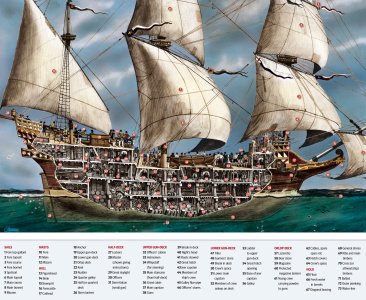
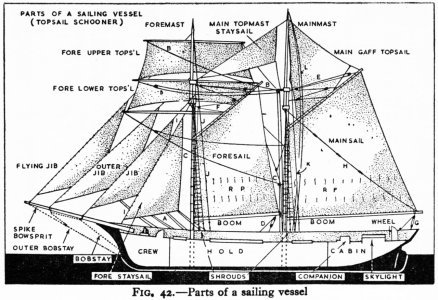
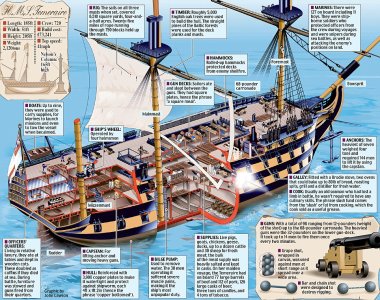
Specifically, clipper ships, and even more specifically extreme clipper ships similar to Donald McKay's Flying Cloud. I've been searching for hours for some sort of labeled diagram of similar ships, and while I know a fair amount of a few ship's histories (like hers), the actual names of parts are something I'm not confident in at all. I'm not even confident enough to know if those parts are interchangeable between clippers, schooners, brigantines, etc. (though I am aware of the obvious differences like number of masts). I definitely tend to find their history far more interesting than their parts.
The ship in book 3 is modeled after an Extreme Clipper like the Flying Cloud, (and, yes, I know she technically didn't meet the specs for "extreme") and she isn't the story, she's just a part of it, but I don't want to sound like a moron when I name things. I do my best to be accurate and this is really cramping my word count for the day, lol.
Any naval aficionados that could help a girl out? I'll be eternally grateful.
The ship in book 3 is modeled after an Extreme Clipper like the Flying Cloud, (and, yes, I know she technically didn't meet the specs for "extreme") and she isn't the story, she's just a part of it, but I don't want to sound like a moron when I name things. I do my best to be accurate and this is really cramping my word count for the day, lol.
Any naval aficionados that could help a girl out? I'll be eternally grateful.


 WE LOVE LIBRARIANS!!!!


