Glossing Over Realism in Stories

Luxuria

Edgy McEdgeface
Active Member
Member
New Member
I tried to come up with a good title, but something has been bothering me in the last week. I read a comic book and got annoyed that the writer wasn't dealing with the reality of what was happening in the story very well. It might have been a writer problem, but I think it's part of what annoys me about many stories. In the comic book, a character created several different universes, then accidentally unleashes a world destroyer who wrecks all of them- and kills billions. But there are only a few panels discussing this or the character feeling sad about it. If it was my story, it wouldn't be so easily...brushed off? Or set aside so quickly? It was this book then that made me wonder what IS the difference between how I write characters and how others do.

I want to say I focus a lot on the consequences of characters actions- although they don't always get what they deserve. But I think there is this weight and sense of emotion I feel when I focus on the reality of the story. Which one might concider 'angst' in fanfiction terms. It also leads me to wonder WHY some writers just gloss over things so easily and are like, 'oh, these characters had a sad moment, let's move on!'. It baffles me.

I know I am rambling here now, but I am trying to get down to why this approach personally bothers me and if as writers, we should focus more on the reality of what's happening to the characters. I mean, to me, they are living people in their own worlds. Does anyone else feel the same about any of this?

I have also heard people say my writing is dark, which it is, but is that because of my grasp of in-story reality? I don't know. It's just how I write. I just wanted to discuss this.
 
If it was my story, it wouldn't be so easily...brushed off?

OK, but the key point is that it's *not* your story. Someone else wrote it and made the narrative choices that they did, which won't work for everyone, but will work for some. Clearly, it worked for the editor who chose to publish it.

Perhaps they didn't dwell on it because it wasn't important to the main theme of the story, given the amount of space they had to work with.
 
OK, but the key point is that it's *not* your story. Someone else wrote it and made the narrative choices that they did, which won't work for everyone, but will work for some. Clearly, it worked for the editor who chose to publish it.

Perhaps they didn't dwell on it because it wasn't important to the main theme of the story, given the amount of space they had to work with.

That's true. And I suppose you're right about theme. Which superhero comics are usually direct opposite of themes I usually enjoy. But sometimes I like reading them. This one just irked me, because BILLIONS of people died and I was like... aren't we going to say more about this? Space is also an issue, I agree.
 
Statistics! Until we hear about that one kitten.

I'm with you to a large degree, though I reckon our reading material is generally diffierent. Easy resolutions, loose ends all tidied up, are the things that I find irksome.

Haha, yeah. Exactly that.

Thanks, I am glad to know I am not the only one. But yes, I agree with you. My reading material is very different from yours. I like all my loose ends tied up. But the story doesn't have to have easy resolutions.
 
I tried to come up with a good title, but something has been bothering me in the last week. I read a comic book and got annoyed that the writer wasn't dealing with the reality of what was happening in the story very well. It might have been a writer problem, but I think it's part of what annoys me about many stories. In the comic book, a character created several different universes, then accidentally unleashes a world destroyer who wrecks all of them- and kills billions. But there are only a few panels discussing this or the character feeling sad about it. If it was my story, it wouldn't be so easily...brushed off? Or set aside so quickly? It was this book then that made me wonder what IS the difference between how I write characters and how others do.

I want to say I focus a lot on the consequences of characters actions- although they don't always get what they deserve. But I think there is this weight and sense of emotion I feel when I focus on the reality of the story. Which one might concider 'angst' in fanfiction terms. It also leads me to wonder WHY some writers just gloss over things so easily and are like, 'oh, these characters had a sad moment, let's move on!'. It baffles me.
If you buy into the scene/sequel approach, it means you're feeling a bit ripped off by a short sequel. The recovery (sequel) phase is that important bit that explores and contextualizes what happened, how the characters feel about it, how/if the stakes changed, and what paths there are forward. It can be as short as a few sentences or as long as chapters according to Structuring Your Novel. I don't know. It seems reasonable to me.

If the author needs to slow things down, she stretches out the sequels. If things are too long (or perhaps a test-audience claims it's boring because things aren't happening), she butchers them. I think that's why Hollywood bloat movies are so forgettable: so little time spend recovering from the beats.

In this case of this comic book, it seems tricky. It's supposed to have an epic scope, but also tell a story in a few dozen pages. Since it's a visual format perhaps there's one really nice shot of the character's anguish that the reader is supposed to linger on?
 
I think the main issue is that it was a comic book. They don't tend to be very mature. If only billions died, then I also don't think the entire universes were destroyed, since then far more than billions would perish, but that's a nit-pick.

Comics tend to be aimed at teens. And superheroes as far as I am concerned tend to be egotistical with some anti-human messaging going on. It's like humanity can never help themselves, but must be saved by some prick with super powers.

Forgive my ramblings, by now you must have realised that I'm a villain.
 
The character in that comic is obviously some god-like being. He created all those universes, then accidentally unleashed the destroyer upon them. Put that into the perspective of a normal person. Imagine you were making dinner for the family and burned the roast. You'd be upset, but not that upset, and you'd probably just end up ordering takeout. A god-like being may not have the same reverence for life that a human would, because he can make and destroy that life on a whim. If it goes badly, toss it out and try again. So, what you read may have been true to the character.

In Star Wars, how many billions died when Alderaan was destroyed? How much time did they spend lamenting it? I don't know how many were on the death star, but not a single tear was shed when they were all killed.

Characters showing emotion is important, but it's very easy to go too far with it. You're better off erring on the side of too little rather than too much. Give the moment the weight it deserves and then move on, keeping in mind who the character is and how they would react to it. Some people don't react with tears. They might instead react with anger, or a desire to do things to distract them from brooding on their pain. The actual emotional reaction might be delayed.

It's a difficult balance. You want to give it enough space so that the reader will have their own time to grieve, but at the same time, you don't want to belabor it to the point that it becomes melodramatic.
 
Writing in certain formats or in certain genres comes with genre expectations. People who read comic books, or watching science-fantasy adventures aren't reading for those things. And when authors try to shoehorn them in, they often fall flat. Thanos killed half the universe? Hey, everything just goes on. A bit sadder than before, but still carries on.

Audiences weren't looking for an investigation into the effects of the massive death toll of Alderaan, or the families of the cleaners, mess hall workers, low level functionaries on the Death Star. Or the morals of killing tens of thousands on it. They wanted to know that the good guys won.

Your choice, as an author, is whether you want to write to meet genre and audience expectations, or write outside it.

Comics tend to be aimed at teens. And superheroes as far as I am concerned tend to be egotistical with some anti-human messaging going on. It's like humanity can never help themselves, but must be saved by some prick with super powers.

That's not an anti-human message. That's the author's chosen narrative engine. It'll work for some people, not necessarily teens, who have perhaps a more cynical or nihilist outlook, and those who enjoy the story in its own right. No story works for everyone, and not all stories are written to send out specific messages. The Avengers wasn't written to tell people that death comes to everyone, no matter who they are. It was written so that heroic superfriends beat the Big Evil, and to let you enjoy the events along the way.
 
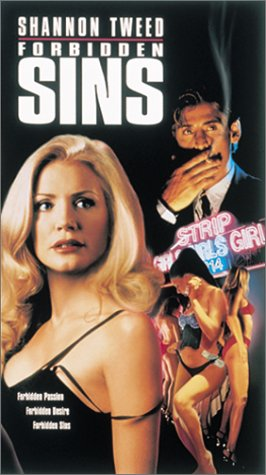
It's a comic book. It kind of leaves the gate as the antithesis of realism, narrative weight, and emotional complexity. Nothing wrong with that at all, I love turning my brain off as much as the next man, but asking a character who can build universes (somehow) to reconcile the emotional gravitas is a bit like asking Shannon Tweed to examine why she has to seduce every husband in the Cinemax movie world.

1769787261218.png
 
It's a comic book. It kind of leaves the gate as the antithesis of realism, narrative weight, and emotional complexity. Nothing wrong with that at all, I love turning my brain off as much as the next man, but asking a character who can build universes (somehow) to reconcile the emotional gravitas is a bit like asking Shannon Tweed to examine why she has to seduce every husband in the Cinemax movie world.

View attachment 857
Ooh. I like Shannon Tweed. First saw her in that movie with the Beastmaster and Beastmaster 2 actor.
 
Ooh. I like Shannon Tweed. First saw her in that movie with the Beastmaster and Beastmaster 2 actor.
I wrote Sharon Tate the first time, googled for an image, and was like WTF?

ETA: Taking a closer look at the panoply of google images in my search, I'm not sure if I saw every one of the Shannon Tweed Cinemax movies when I was a kid, none of them, or if it makes a difference.
 
Last edited:
The character in that comic is obviously some god-like being. He created all those universes, then accidentally unleashed the destroyer upon them. Put that into the perspective of a normal person. Imagine you were making dinner for the family and burned the roast. You'd be upset, but not that upset, and you'd probably just end up ordering takeout. A god-like being may not have the same reverence for life that a human would, because he can make and destroy that life on a whim. If it goes badly, toss it out and try again. So, what you read may have been true to the character.
Actually, this is what's weird. The character with the power to create whole universes was a human teen boy. Who seemed plucky and normal? Not at all a supervillain by any means. But I understand what you're saying.
In Star Wars, how many billions died when Alderaan was destroyed? How much time did they spend lamenting it? I don't know how many were on the death star, but not a single tear was shed when they were all killed.
Yeah, Alderaan was kinda swept under the rug in the main films. Although, the Star Wars series, The Horrors of the Galaxy or something had characters from Alderaan who were off-planet at the time. So they were spared and it dealt with it well for a kid book. Also, in the NEW Disney universe, there's a book about Leia called Bloodlines that talks about it a bit. But funny thing, the writers of the Disney universe have spent more time discussing the destruction of the Death Star (and the apparently innocent people who died) than Alderaan. Which feels kinda fucked up. Because there's the series, Lost Stars. Even though I love all my evil Star Wars Characters, I think the writers are totally skimping on Alderaan, because???
It's a difficult balance. You want to give it enough space so that the reader will have their own time to grieve, but at the same time, you don't want to belabor it to the point that it becomes melodramatic.
That's fair. I will be honest. A lot of my work ends up being a bit melodramatic, maybe? That might be part of the difference.
Your choice, as an author, is whether you want to write to meet genre and audience expectations, or write outside it.
Oh, I write outside ANY genre. Because I want to explore things from a different angle.
It'll work for some people, not necessarily teens, who have perhaps a more cynical or nihilist outlook, and those who enjoy the story in its own right.
Oh. This was me! I was too logical and into real-world consequences as a teen to enjoy most, if any superhero stories. It's honestly not my genre. I only really like Ghost Rider and sometimes Wolverine. But they are not the typical super hero. Oddly enough, I don't really like Deadpool from the movies and I haven't read his comics yet.
 
Audiences weren't looking for an investigation into the effects of the massive death toll of Alderaan, or the families of the cleaners, mess hall workers, low level functionaries on the Death Star.
Bringing to mind the best repeat Austin Powers gag; the ordinary people in the bar after work mourning the loss of grunt no.28, that Powers shot without a second's thought, etc.
 
Back
Top