The artistic experience

Louanne Learning

Active Member
Member
New Member
Role Play Moderator
Winner: 4th Contest August Winner: June Flash Fiction
What does the artistic experience mean to you, or for you?

Share your insights, revelations and perspectives about the art of writing – and the artistic process – in this thread.

You might draw on something you read, or wrote, or something that came to you in the shower this morning, or your ideas in general about the art of writing.
 
I was inspired to start this thread by something I read yesterday – that art is the creation of order and clarity our of chaos.

That creating art may be considered “our most constructive coping mechanism for the incomprehension of life and mortality” – especially in uncertain times.

English novelist, essayist and broadcaster E.M. Forster celebrates this “stabilizing power of art in times of incoherence and discord” in his collection Two Cheers for Democracy -

A work of art… is the only material object in the universe which may possess internal harmony. All the others have been pressed into shape from outside, and when their mould is removed they collapse. The work of art stands up by itself, and nothing else does. It achieves something which has often been promised by society, but always delusively. Ancient Athens made a mess — but the Antigone stands up. Renaissance Rome made a mess — but the ceiling of the Sistine got painted. James I made a mess — but there was Macbeth. Louis XIV — but there was Phèdre. Art… is the one orderly product which our muddling race has produced. It is the cry of a thousand sentinels, the echo from a thousand labyrinths; it is the lighthouse which cannot be hidden.

This particular view of art struck a chord with me. When I write a story, I hope it becomes a clear statement about some aspect of this reality we find ourselves in. It does not always have to be glorious, sometimes it is simple, but still I hope some bit of truth is revealed.
 
Art of writing, for me, personally, is a hobby.

So, I cannot look at it as anything too serious. Some helpful byproducts of writing, for me is maybe a better grammar, some improved language comprehension. Good. One point against the Chaos, I agree.

Also, the writing has the limits. I am puzzled with enigma of how words cause feelings. Especially positive feelings. And I still did not decide, if it can work or if it works, then to what degree?

Maybe my misconception is that human intelligence is language based. I suspect, that before being able to think in language, I was much more harmonious and much happier person. One point for Chaos then.
 
I don't regard myself as an artist, or what I do as art.

At most, I'm a craftsman, trying to build a nice cabinet, not a statue. Ultimately, I hope what I will ultimately create are commercial products.
 
I am puzzled with enigma of how words cause feelings. Especially positive feelings. And I still did not decide, if it can work or if it works, then to what degree?

Good question. Maybe it begins with the words creating an image in our minds, which our minds associate with memories, feelings and thoughts we have, and then our imaginations run with it.

Is a story more than a string of mental images?
 
If I can speak from knowledge of other profession. The story is an information. In that sort of theory, the information is the means of resolving the entropy, ambiguity. Story is the answer, the resolve of some preexisting posted problem about something unknown, yet with possibility to eventually know.

So, I agree that writing is good for coping with incoherence of existence.

Say, it feels good to stumble upon a story, and receive a sudden wonderful fictional answer to one of existential problems, imaginary or real.
 
I feel like I'm more of a storyteller than an artist. Though they may be the same thing.

The image I get in my mind when someone says artist is one who is free and unburdened by norms or standards. If I truly felt like I was an artist, I wouldn't bother even trying to apply proper grammar or spelling. I would feel unobliged to make sense to whoever my reader was. I would just write the words as they form in my mind, carefree and productive. Whatever the end result would be, would be art, free from external pressures and expectations.

This image I get is just my own, and it may be a corrupted image of what an artist is. Perhaps they can be many things, and among them, one who follows standards to the letter. See for example classical architecture, I consider ancient and old buildings works of art, and they adhere to laws and rules quite strictly.

I suppose my image comes from the modern artist, who does not seem to care about rules. And for me, the modern artist in this sense is boring, because it's far too easy for them to do their art. Just pile up a bunch of trash on a white sheet and they can call it art. For me, art should have a layer of thought and consideration behind it.

If I were to see myself as an artist, it would be in the world I've created. A world that has shaped itself in my mind for more than a decade, with its societal structures, architecture, technology, etc. All of that took at least some thought.
 
I feel like I'm more of a storyteller than an artist. Though they may be the same thing.

imo, they definitely are

The image I get in my mind when someone says artist is one who is free and unburdened by norms or standards
I suppose my image comes from the modern artist, who does not seem to care about rules.

"Rules" is a big category - I'm talking about writing here, now - breaking them might mean not following grammar rules, or inventing a narrative structure, or doing something unexpected of you, or deviating from popular opinion, or authority, or established dogma -

As for writers, I think most of them do follow grammar rules. Can they be artists? For sure, every time they are creative, and use their “ability to come up with ideas or artefacts that are new, surprising and valuable.”

Decoding the Mystery of Intuition: Pioneering Philosopher of AI Margaret Boden on the Three Elements of Creativity


But my scientific background has me going back to the old saw of "structure and function."

For me, when it comes to structure, I am a rule follower, mostly - I think using the language properly is important, and respectful. I think weird uses of the language is kind of distracting, and interferes with absorption in the story.

But with the function of the writing - this means the meaning of it - the only rule is to tell the truth.
 
You might draw on something you read, or wrote, or something that came to you in the shower this morning, or your ideas in general about the art of writing.
My impetus for writing the following was reading a revived thread Trish began last summer, entitled Content v. Creator.

Writing is my profession, i.e. I make my living by stringing words together. I am not the kind of writer who presents a controversial subject and leaves readers to make up their own minds. My agenda is to teach people to recognize and fight against what is romantically called forces of darkness.

Some people believe writers are limited by their own experiences. A woman at a author talk and book signing offered her sympathy for the hard life I'd obviously led because, "no one could make those things up." The hell I couldn't. Imagination is a vital part of my freaking job. To quote the late, great Jean Redpath: "You don't have to murder your brother to sing a song about it." To wield fiction as a weapon against injustice, one must first present injustice in fictional form. Those scenarios are a means to an end and presenting them realistically is not automatically indicative of prurient interest or personal experience.

I suppose my image comes from the modern artist, who does not seem to care about rules. And for me, the modern artist in this sense is boring, because it's far too easy for them to do their art. Just pile up a bunch of trash on a white sheet and they can call it art. For me, art should have a layer of thought and consideration behind it.

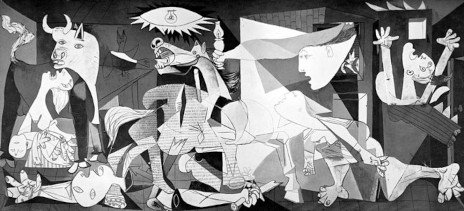
This is an interesting conjecture, and one that I have some sympathy for, though not nearly as much as I did before taking a college drawing class decades ago. The instructor commented that people don't appreciate modern art because they don't have the education they need to appreciate it. I thought that was the silliest thing I ever heard. It's freaking art; all ya gotta do is look at it (or in the case of literature, read it) in order to see if it makes sense or not. Over the course of the class, though, I got to thinking that this fellow who'd studied and created art for sixty years just might accidentally know something about it I didn't. So I started looking into what was behind abstract expressionism and cubism. Having educated myself a bit, I went back and looked at Picasso and Mariska Karasz again. Lo and behold, their work made sense. I branched out from there and found whole new worlds to consider.

That isn't to say all art is good art, but sometimes it really is a matter of the right education.
 
"no one could make those things up." The hell I couldn't. Imagination is a vital part of my freaking job.

I love this.

To wield fiction as a weapon against injustice, one must first present injustice in fictional form.

I know there has been some discussion about "writing what you know" - but I think this means your understanding of the human condition and parts thereof, not necessarily one individual's experience. I always remember a response I read to someone who had commented that you should only write people who are like you. The replier said, "Well, how did George R.R. Martin do with writing a dwarf?"

That isn't to say all art is good art, but sometimes it really is a matter of the right education.

And also sometimes going beyond the knee-jerk reaction. Maybe trying to understand the artist's POV.
 
Art… is the one orderly product which our muddling race has produced. It is the cry of a thousand sentinels, the echo from a thousand labyrinths; it is the lighthouse which cannot be hidden.
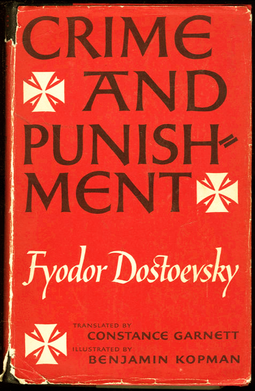
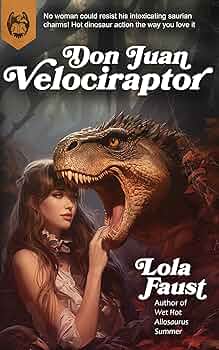
Yep, what a concept. I could use a little art myself. The artistic experience includes these two things:
Crimeandpunishmentcover.png
81cG2aPdjOL._UF350,350_QL50_.jpg

They're both valid. Both are uh, cries of a thousand sentinels, and um well, you know, the echoes from a thousand labyrinths. There isn't so much snootiness about art, rather it's snootiness about what we're willing to or not willing to attribute to the human condition, even though by just existing they evidently are a part of our psyche.

I think the more pretentious a definition of art gets, the further it strays from functional definition. Part of that is because while I and Ms. Faust, if that is her real pen name, do not share preference of scales, we do share preference of coin.

Rent or mortgage or Loblaws grocery bill are so very much aspects of our collective un/conscious.
"Mere material things!" one might say, before his monocle falls out and bounces off his belly.
We are material, and our dependence on material things (like food, comfort) might be our only tether to relevance.

My artistic experience is just human experience, except via creation I locked something in, crystallized an expression of whatever complexity, for whatever reason petty or grand.
 
Both are uh, cries of a thousand sentinels, and um well, you know, the echoes from a thousand labyrinths.

Lol, you make it sound unattainable? Aren't each of us a sentinel? Is not each mind a labyrinth?

There isn't so much snootiness about art, rather it's snootiness about what we're willing to or not willing to attribute to the human condition, even though by just existing they evidently are a part of our psyche.

excellent observation

I think the more pretentious a definition of art gets, the further it strays from functional definition.

Pretentious to whom? I don't think anyone who ever attempted to define art was pretending

Rent or mortgage or Loblaws grocery bill are so very much aspects of our collective un/conscious.
"Mere material things!" one might say, before his monocle falls out and bounces off his belly.
We are material, and our dependence on material things (like food, comfort) might be our only tether to relevance.

Yes, we have to pay the bills. I have to pay the bills. But meeting basic needs is a far cry from making accumulation of material things the basis of your existence. I am going to say a controversial thing now - I think artists are less concerned with material things (even though they do like to eat.)

My artistic experience is just human experience, except via creation I locked something in, crystallized an expression of whatever complexity, for whatever reason petty or grand.

I like this sentiment very much. Thank you for sharing it.

I, too, believe that at the heart of art is the human experience - put into another form capturing it forever.
 
Back
Top